Understanding Brownstone Deterioration
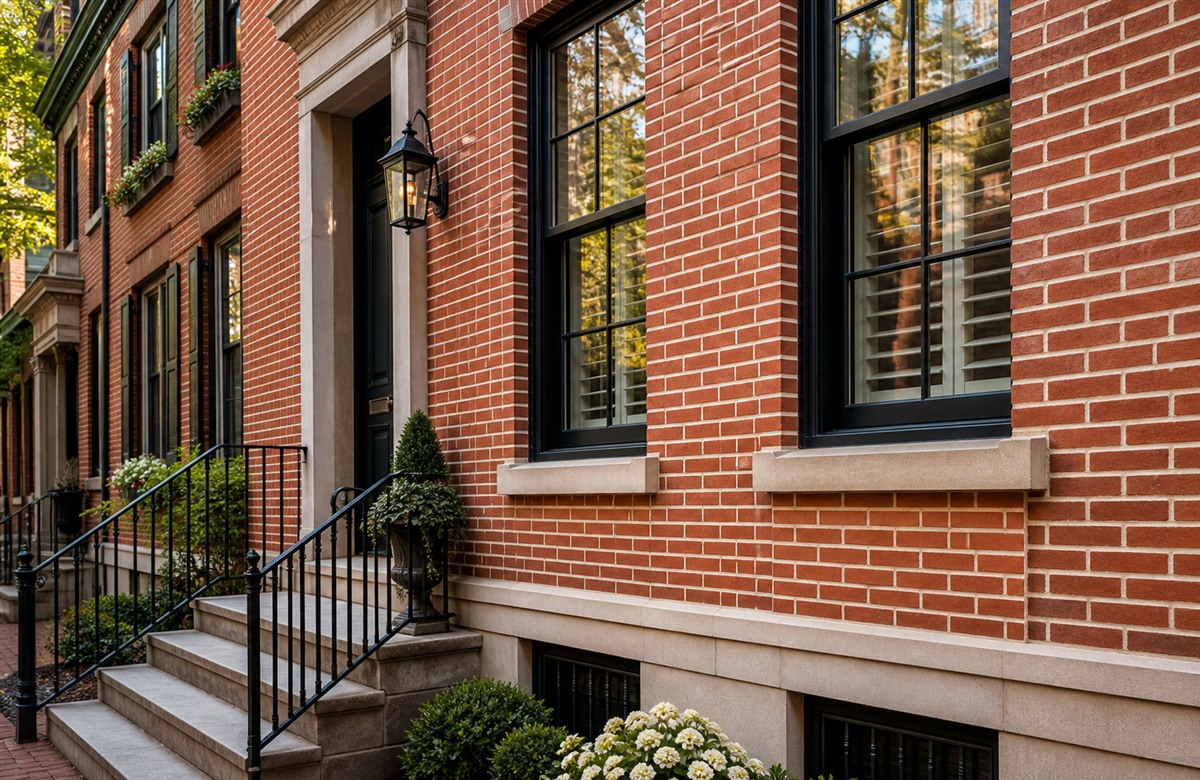
Brownstone is a soft sandstone material that naturally wears down over time, especially when exposed to moisture, pollution, and freeze-thaw cycles. Unlike modern concrete or hard stone, it is porous and absorbs water easily, which accelerates breakdown if not properly maintained.
Common signs of brownstone deterioration include:
- Surface flaking or sand-like erosion
- Deep cracks forming along ledges or steps
- Sections breaking away or becoming hollow underneath
- Water staining or dark streaks on the facade
Once deterioration begins, it rarely stops on its own. Without intervention, small surface issues can develop into structural loss, requiring full stone replacement instead of targeted repair.
Why Lintels Are Critical to Structural Stability
Lintels are the horizontal supports installed above windows, doors, and other openings. In older Philadelphia homes, they are typically made of steel or stone and are responsible for carrying the weight of the brick above these openings.
When lintels fail, the surrounding masonry begins to shift and crack. This is one of the most common causes of stair-step cracks and facade separation in older rowhomes.
Warning signs of lintel problems include:
- Horizontal cracking above windows or doors
- Brick bulging or bowing outward
- Rust stains running down brick surfaces
- Gaps forming between lintel and masonry
Because lintels support structural loads, even minor deterioration should be addressed early before it leads to major rebuilding work.
Repair vs Replacement: Knowing the Difference
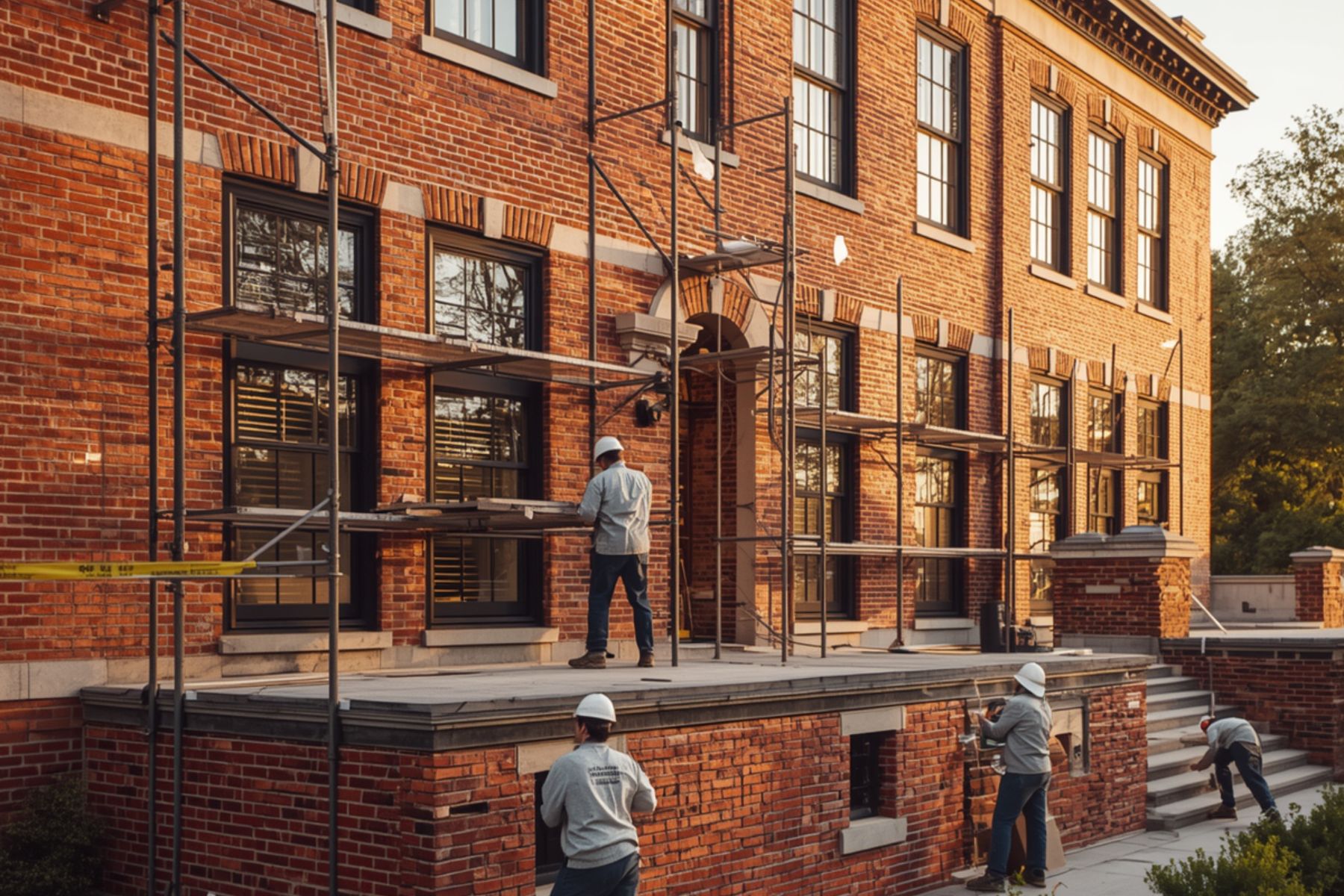
Not all brownstone or lintel issues require full replacement. In many cases, targeted repair can restore strength and appearance while preserving original materials. The key is understanding the extent of damage and the condition of the surrounding masonry. Typical repair approaches include:
- Patch repair and consolidation of surface brownstone loss
- Repointing surrounding mortar joints for stability
- Rust treatment and reinforcement of steel lintels
- Partial brick rebuilding around compromised sections
However, full replacement may be necessary when:
- Brownstone has lost structural depth or integrity
- Lintels are severely corroded or cracked
- Surrounding brickwork is no longer stable or aligned
A proper inspection determines whether preservation or replacement is the most effective long-term solution.
Why Early Intervention Protects Your Property
Delaying Brownstone or lintel repairs often leads to more extensive and expensive damage. Water infiltration is usually the driving force behind both issues, and once moisture enters the system, deterioration accelerates quickly.
Proactive maintenance helps:
- Prevent facade instability and brick movement
- Reduce long-term restoration costs
- Protect interior walls from moisture damage
- Maintain curb appeal and historic character
- Extend the lifespan of original masonry materials
For older Philadelphia properties, regular inspections are essential because small exterior changes often reflect deeper structural issues. If you need help with brownstones repair, get in touch with our team.
Related Guides
FAQ
What is rust jacking?
Rust jacking happens when corroding steel expands and pushes surrounding masonry out of place.
Is cracked brownstone only cosmetic?
Not always. Cracks, loose material, and displacement near openings should be evaluated for water entry and safety.