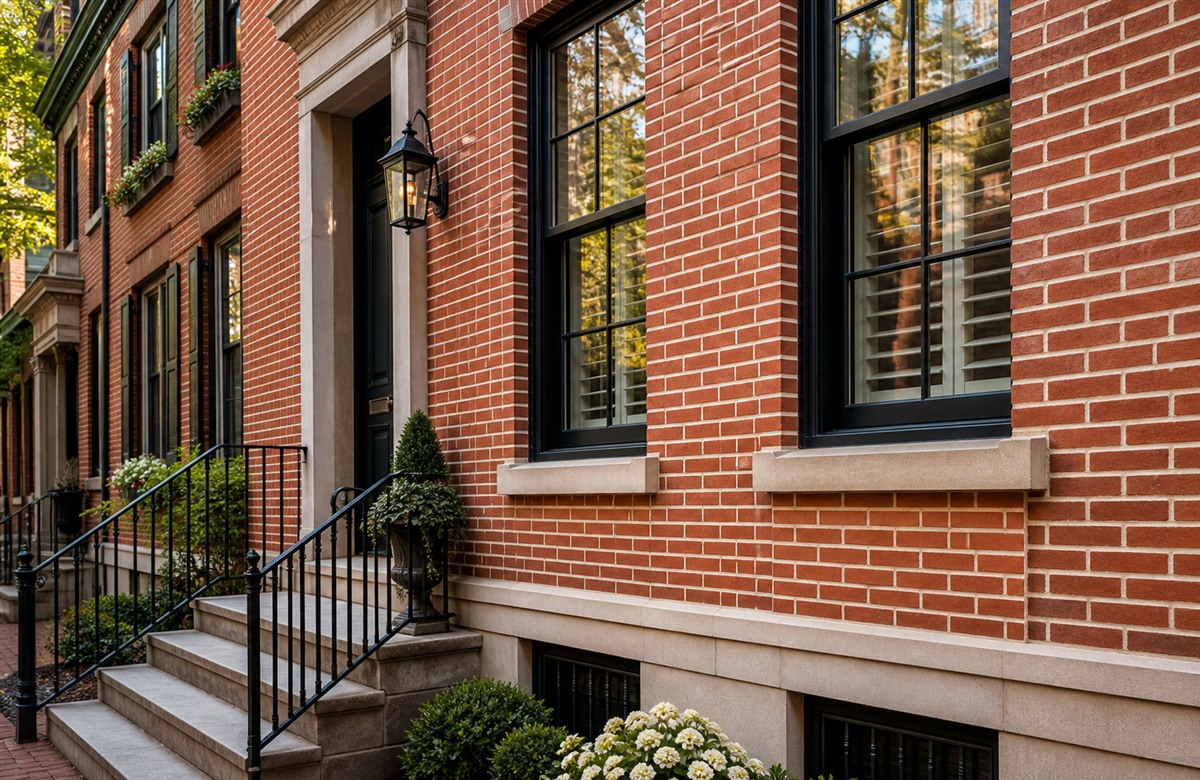

Why Water Intrusion Becomes a Serious Masonry Problem
Many people assume brick is completely waterproof, but masonry materials are naturally porous. Brick and mortar absorb water over time, especially when exposed to repeated rain, humidity, and poor drainage conditions.
Older Philadelphia buildings are particularly vulnerable because historic brick is often softer and more breathable than modern masonry products. While this flexibility helps older structures release moisture naturally, excessive water exposure can overwhelm the system and lead to gradual deterioration.
Moisture commonly enters through:
- Cracked mortar joints
- Damaged flashing or parapets
- Open gaps around windows and doors
- Failing chimney crowns or roof edges
Once water enters the wall system, the damage often spreads beyond the visible surface.
Freeze-Thaw Cycles Cause Expansion Damage
One of the most destructive effects of moisture is the freeze-thaw cycle. During cold weather, trapped water inside brick and mortar freezes and expands. As temperatures rise, the ice melts and contracts again.
This repeated expansion places pressure on masonry materials, slowly weakening the surface and internal structure of the facade. Over time, bricks begin to crack, separate, or break apart entirely.
Common signs of freeze-thaw damage include:
- Spalling or flaking brick faces
- Cracked mortar joints
- Loose masonry sections
- Bulging or shifting walls
The longer moisture remains trapped inside the facade, the faster this cycle accelerates.
Mortar Deterioration Weakens the Entire Wall
Mortar joints play a critical role in holding brick facades together while also helping manage moisture movement. As water penetrates the wall, mortar gradually begins to erode, crumble, or separate from the surrounding brick.
When mortar joints fail, additional moisture enters the structure more easily, creating a cycle of ongoing deterioration.
Older buildings repaired with overly hard Portland cement mortar may experience even greater problems. Rigid mortar can trap moisture inside softer historic brick, forcing the brick itself to absorb stress and deteriorate faster.
Water Stains and Efflorescence Are Early Warnings
Not all moisture damage appears as major cracking or missing brick. In many cases, the first warning signs are cosmetic changes on the surface of the facade.
Efflorescence is a white powdery residue that forms when moisture pulls salts through masonry and deposits them on the surface as the water evaporates. While it may seem harmless, it often indicates excessive moisture movement within the wall.
Other early warning signs include:
- Dark staining beneath windows or parapets
- Peeling interior paint or plaster
- Mold or damp odors indoors
- Rust stains near metal components
These symptoms should never be ignored, especially in aging masonry structures.
Poor Drainage Makes Moisture Problems Worse
Many facade issues originate from drainage failures rather than the brick itself. Clogged gutters, damaged downspouts, deteriorated flashing, and improper grading can direct water directly into masonry walls.
When water repeatedly saturates the same areas, deterioration accelerates quickly. Philadelphia rowhomes are especially prone to these issues because of shared walls, flat roofs, and aging drainage systems.
Addressing the source of water intrusion is just as important as repairing the visible masonry damage.
Preventative Repairs Protect Long-Term Masonry Health
Moisture damage rarely improves on its own. Small cracks and deteriorated mortar joints eventually allow more water into the structure, increasing repair costs over time.
Routine masonry inspections and early repairs can help:
- Prevent structural deterioration
- Extend the lifespan of brick facades
- Reduce interior water damage risks
- Preserve historic masonry appearance
- Avoid costly large-scale restoration projects
Proper moisture management is essential for maintaining the strength, safety, and appearance of any brick facade. Using compatible materials and addressing water intrusion early helps protect Philadelphia masonry properties for years to come.
Signs of Moisture Damage on Bricks
Moisture damage on brickwork often starts small but becomes more serious as water continues to penetrate the masonry system. Here are the most common warning signs to look out for:
- White, chalky residue (efflorescence) on brick surfaces
- Dark staining or uneven discoloration on exterior walls
- Spalling bricks with flaking or breaking surfaces
- Crumbling or recessed mortar joints
- Hairline cracks expanding across brick faces
- Bulging or bowing sections of brickwork
- Damp or musty smells inside the home
- Peeling paint or bubbling plaster on interior walls
- Rust stains near metal components like lintels or anchors
- Persistent damp patches after rain or snow exposure
Related Guides
FAQ
Can waterproofing sealers damage brick?
Some film-forming products can trap moisture. Product choice should match the wall, exposure, and drying needs.
What is efflorescence?
Efflorescence is white salt residue left behind as moisture moves through masonry and evaporates.