Why Concrete Walkways Require Regular Maintenance
Concrete sidewalks and walkways are exposed to constant foot traffic, weather changes, moisture, and ground movement throughout the year. In cities like Philadelphia, freeze-thaw cycles and seasonal temperature swings can gradually weaken concrete surfaces, leading to cracks, uneven sections, and surface deterioration.
Without routine maintenance, small issues can quickly develop into larger structural problems or safety hazards. Water penetration is one of the biggest causes of long-term concrete damage because moisture expands during freezing temperatures and slowly breaks down the surface from within.
Regular maintenance not only improves appearance but also helps extend the lifespan of sidewalks and walkways while reducing costly repairs later.
Common Signs of Sidewalk and Walkway Damage
Many concrete problems begin subtly before becoming more severe. Identifying early warning signs allows property owners to address issues before the damage spreads.
Common signs of deteriorating concrete include:
- Hairline cracks expanding across walkway surfaces
- Uneven or sunken concrete slabs
- Surface flaking or spalling
- Pooling water after rainstorms
- Loose or crumbling edges
- Discoloration, staining, or moisture spots
- Weed growth through expansion joints or cracks
Ignoring these signs can lead to trip hazards, drainage issues, and further structural weakening over time.
Simple Maintenance Tips That Prevent Bigger Repairs
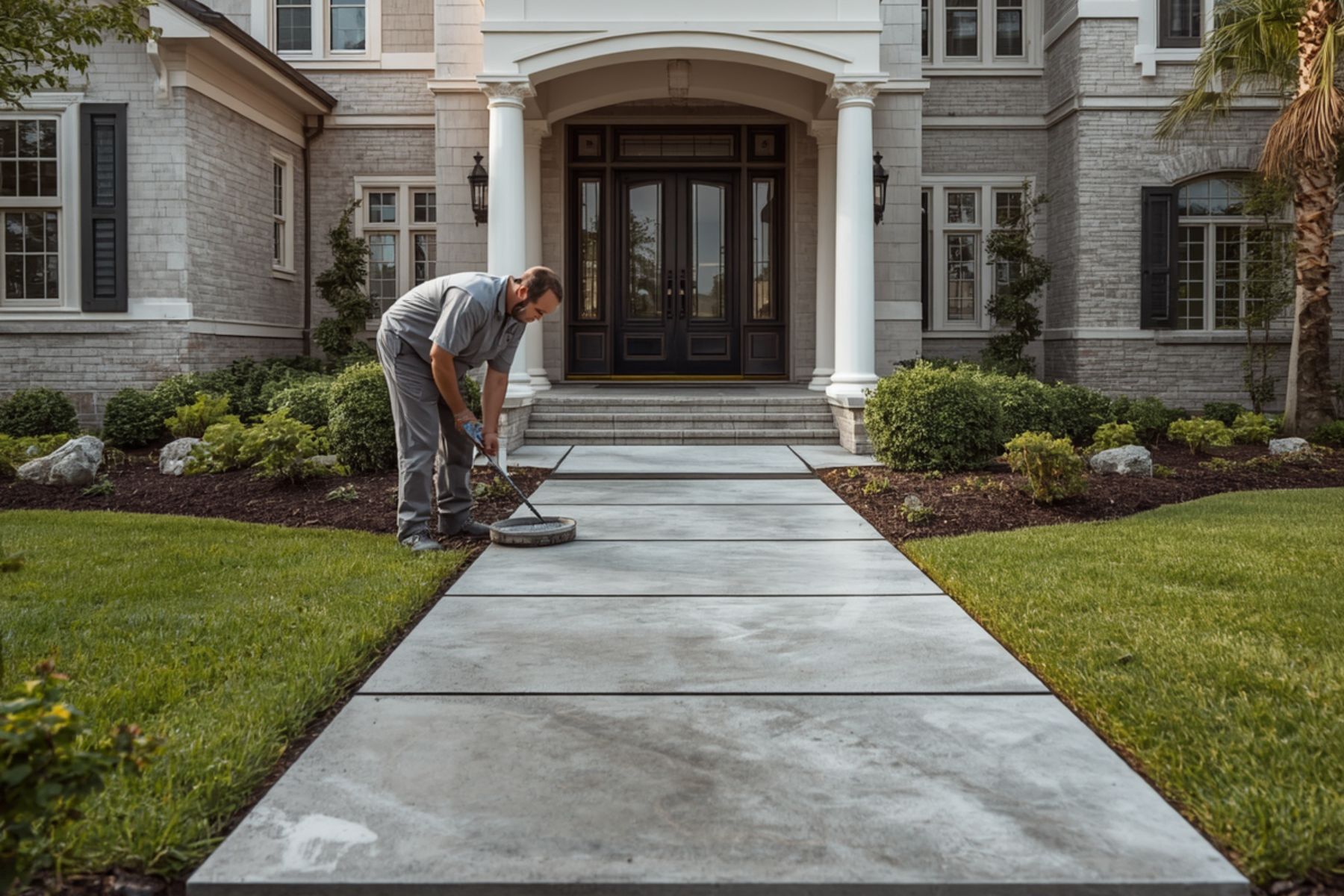
Routine upkeep plays a major role in preserving the condition of concrete sidewalks and walkways. Many maintenance tasks are simple but highly effective in preventing premature deterioration.
Helpful maintenance practices include:
- Cleaning dirt, debris, and standing water regularly
- Sealing small cracks before moisture enters deeper layers
- Ensuring gutters and downspouts direct water away from walkways
- Removing weeds growing between joints or cracks
- Avoiding excessive use of harsh de-icing chemicals during winter
- Checking for drainage problems after heavy rainfall
Proper drainage is especially important because repeated water exposure weakens both the concrete surface and the soil beneath it. When water is allowed to collect around sidewalks, sinking and cracking become much more likely.
When Professional Repairs Become Necessary
While basic maintenance can prevent many problems, some concrete issues require professional repair to restore safety and structural stability. Deep cracks, uneven slabs, or widespread surface damage often indicate underlying settlement or moisture-related concerns.
Professional repair solutions may involve:
- Crack repair and joint sealing
- Concrete leveling for sunken sections
- Surface resurfacing for worn or spalled areas
- Replacing severely damaged slabs
- Improving surrounding drainage systems
Addressing these problems early helps avoid larger reconstruction costs and keeps sidewalks safe for daily use. Well-maintained concrete walkways not only improve curb appeal but also protect the long-term value and functionality of the property. Call us for a free estimate.
Related Guides
FAQ
Are raised sidewalk edges a trip hazard?
Yes. Raised edges can create trip hazards, complicate snow removal, and may need repair depending on local requirements.
How do I reduce sidewalk cracking?
Maintain drainage, keep joints functional, avoid harsh salt use, and address settlement before cracks become widespread.